Five Realms, Five Gods
The shape of the world
The five realms differ in landscape, institutions and faith. Aurin and Olympus contain established cities and routes; Morrigan has an approach and outer rooms, with more of the city under construction. The Underworld Gates serve the return from death. The wider Underworld and Iasos remain in development.
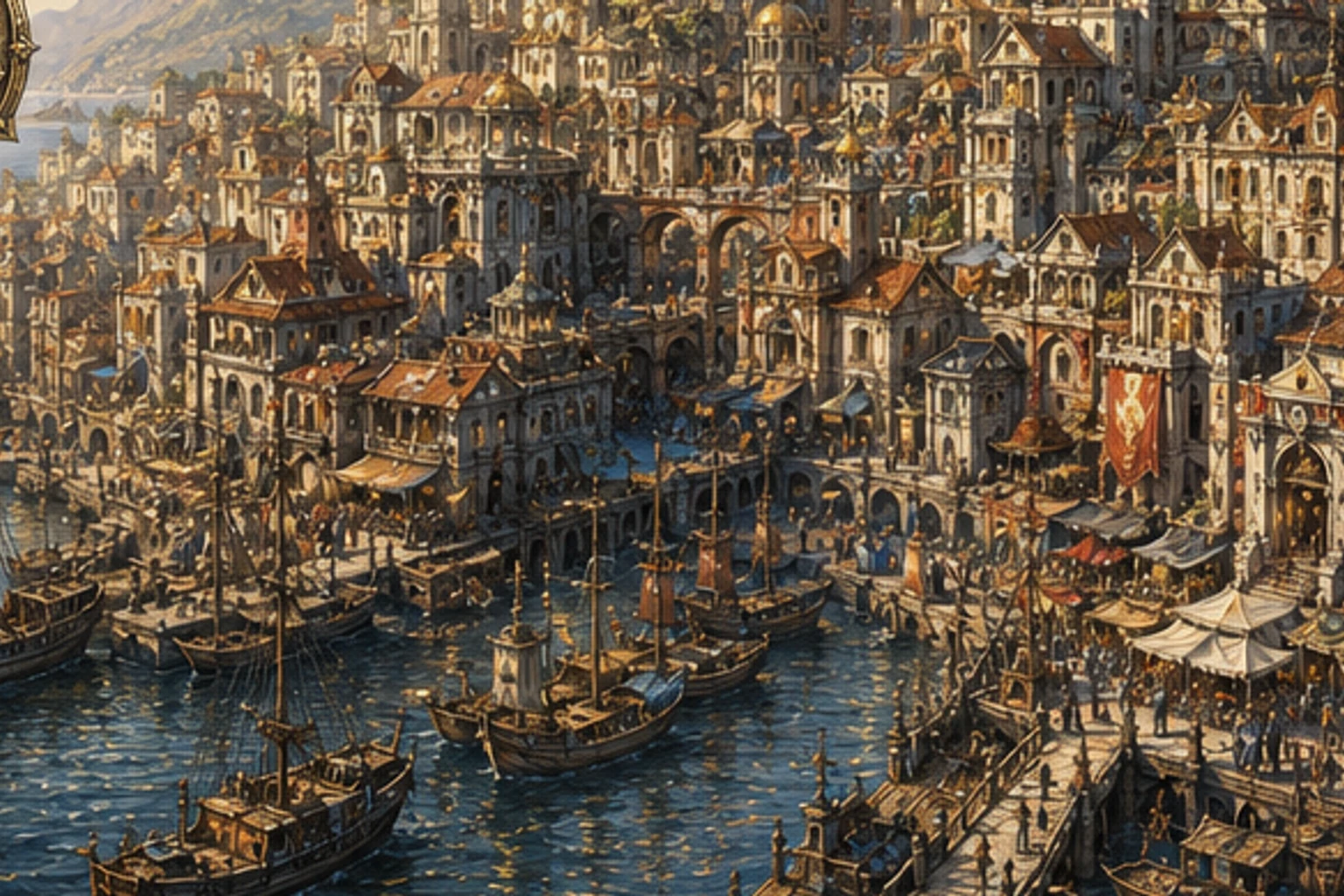
Loralei raised Aurin with the first dawn, lifting white stone from a valley into terraces. Gardens hang over its balustrades, and fountains occupy the squares between guild halls, shops and homes. The radiant sun appears on the goddess's shrines throughout the city.
Aurin has no single crown. Its institutions share authority, with reputation shaping their dealings and their disputes. Loralei's teaching prizes pleasure, desire and prosperity, but the city's ideal of openness sits uneasily beside private wealth and concealed trade. Adventurers arrive here to find training, employment and the roads into the surrounding country.
Walk Aurin ›The eight districts
Dawnward Gates
The gate district, with shrines and a customs house in Aurin's wider setting.
Golden Bazaar
The market district of stalls and trading houses.
Gilded Vaults
Banking and the storage of wealth within fortified buildings.
Luminous Forum
Contract halls, salons and places for public meetings.
Temple of the Radiant Heart
Loralei's sanctuary and the gardens and halls associated with her worship.
Arcane Quarter
The district associated with magical study and guild instruction.
Verdant Rings
Residential terraces, inns and workshops among the gardens.
Gilded Veins
The passages and concealed trade beneath the terraces.
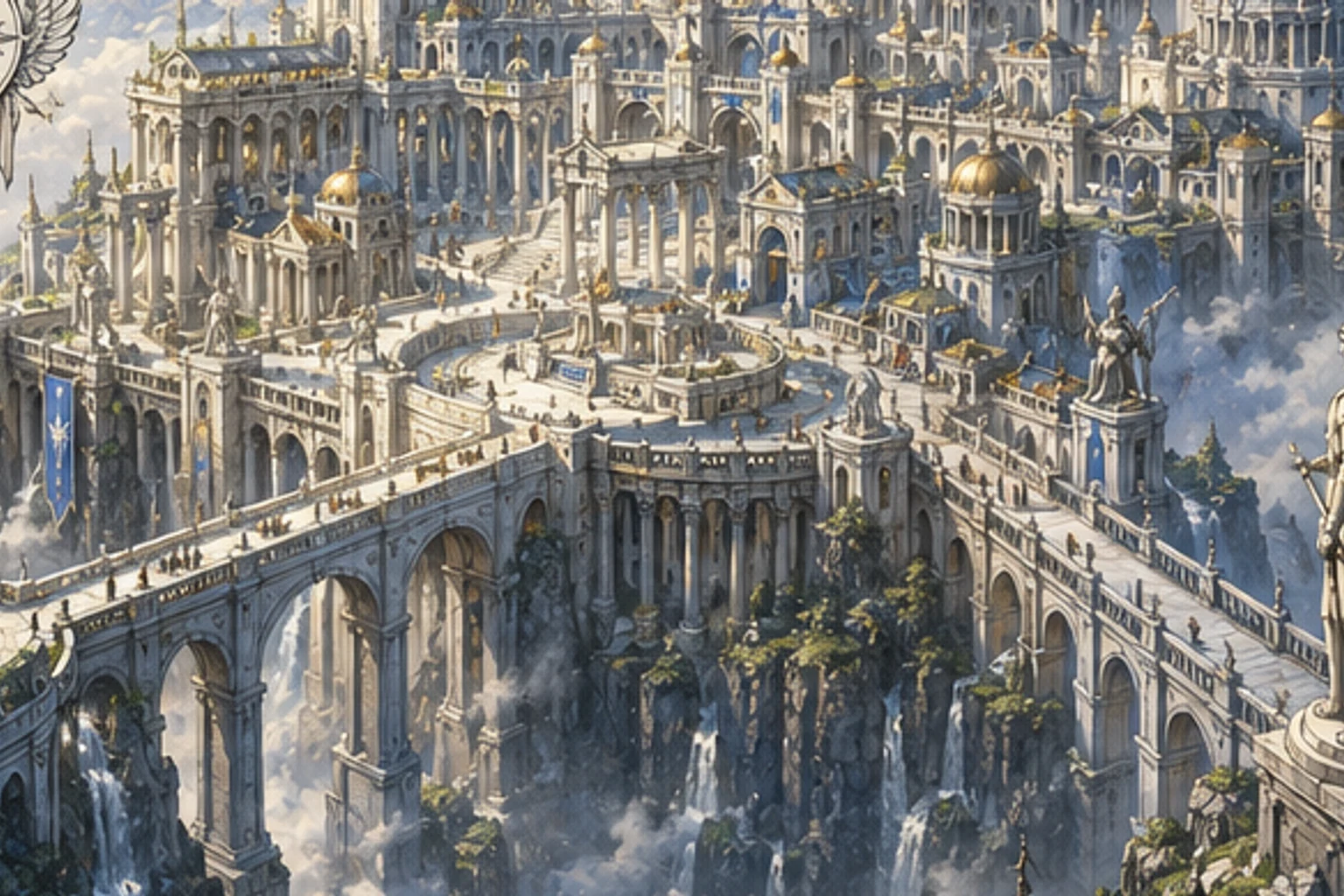
Kranos woke amid the mountains and the fire beneath them. He gathered scattered mortals into armies and established Olympus on a high peak. The citadel remains the centre of his martial faith, with rank and oath governing its institutions.
Switchback roads approach the fortress, passing beneath bridges hung with military banners. Forges serve its troops, and weapons ring across the drill yards. Within the city are trainers and an arena; the catacombs extend below it. The legions, temples and people who supply them make Olympus a working city as well as a stronghold.
Walk Olympus ›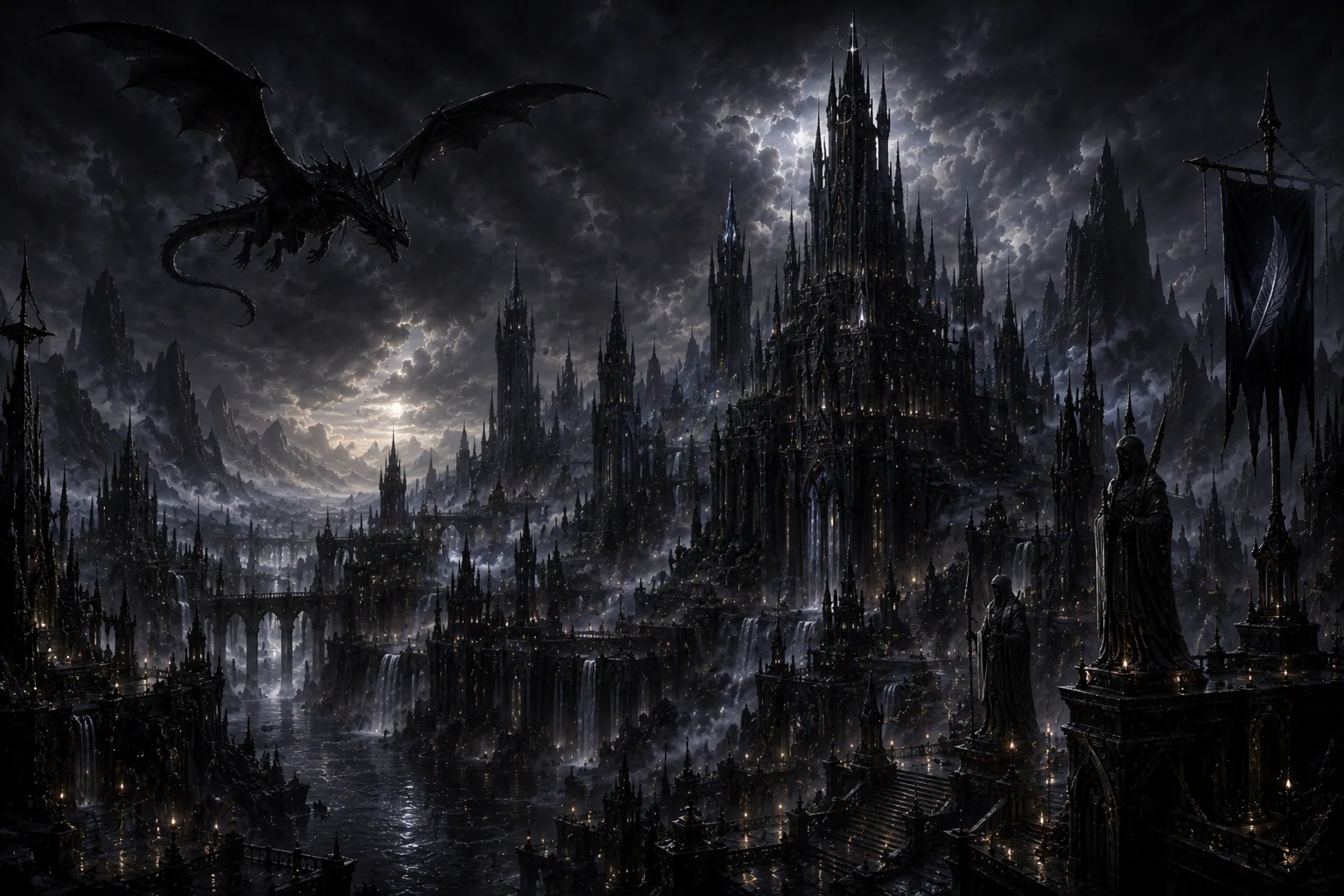
Sivaine arose from the first understanding of fragility and carved Morrigan into obsidian cliffs. Her faith connects wisdom with the examination of suffering, wrongdoing and the claims people make for themselves.
The city's terraces descend along the dark cliff face. Polished stone and narrow panes of glass line its halls; blue lanterns mark the passages. Its religious tradition favours testimony and scrutiny over reassurance. The approach and outer rooms exist in the game, while much of the city described in the realm's lore remains under construction.
Walk Morrigan ›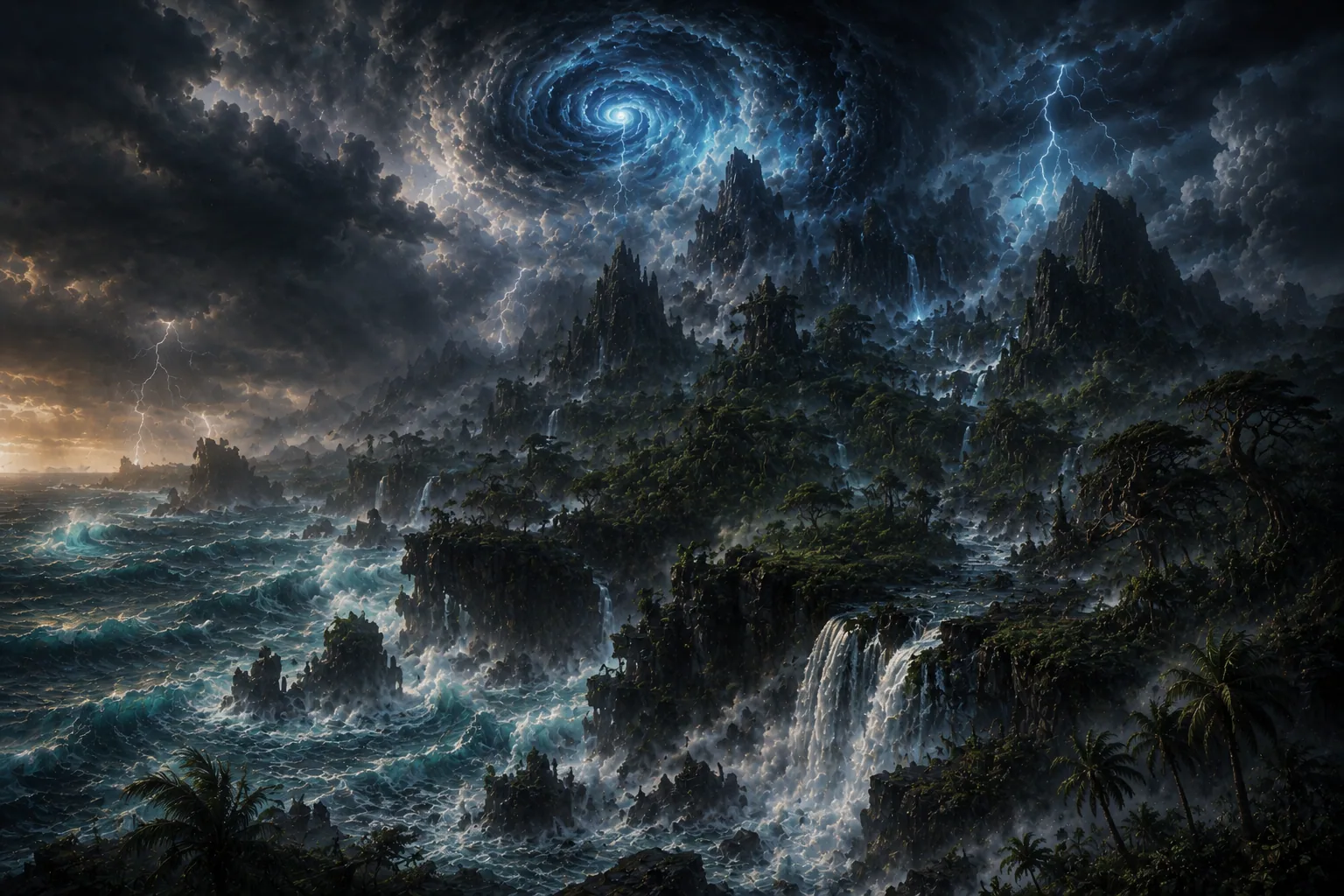
A falling star struck the sea, and Thalos rose from the water amid lightning. He claimed the islands of Iasos, with their sea caves and storm-cut cliffs, but established no throne or capital.
The archipelago forms the maritime realm of the Five. Its worship takes place along coasts and in caverns reached by the tide. Thalos's followers prize freedom and the knowledge needed to live beyond the cities. The islands belong to the setting's established lore; the wider realm is still being built for play.
Walk Iasos ›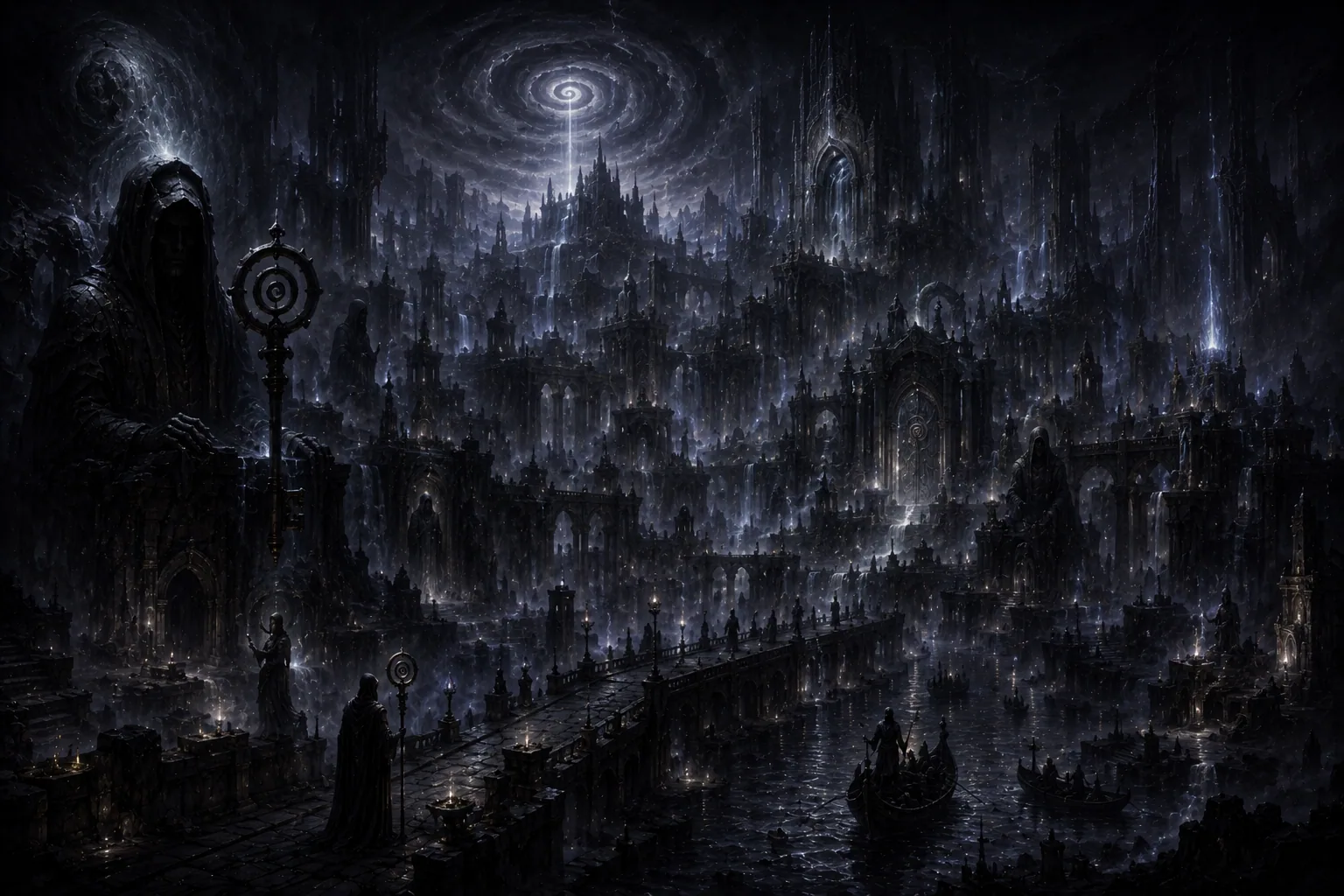
Morbis formed among the fractures of creation, where memories and lost souls gathered. He opened the passage into the Underworld for the first soul caught between life and dissolution. The realm keeps the dead and the obligations they carried from life.
Mist fills its passages, and memories run through the shifting realm like rivers. It has no fixed city. Morbis remains apart from the other gods' disputes, though the records he keeps concern them all. The Gatekeeper and the return from death are available in the game; the wider realm beyond the Gates is still being built.
Walk the Underworld ›